Stories About Where Business Really Begins
Chapter One
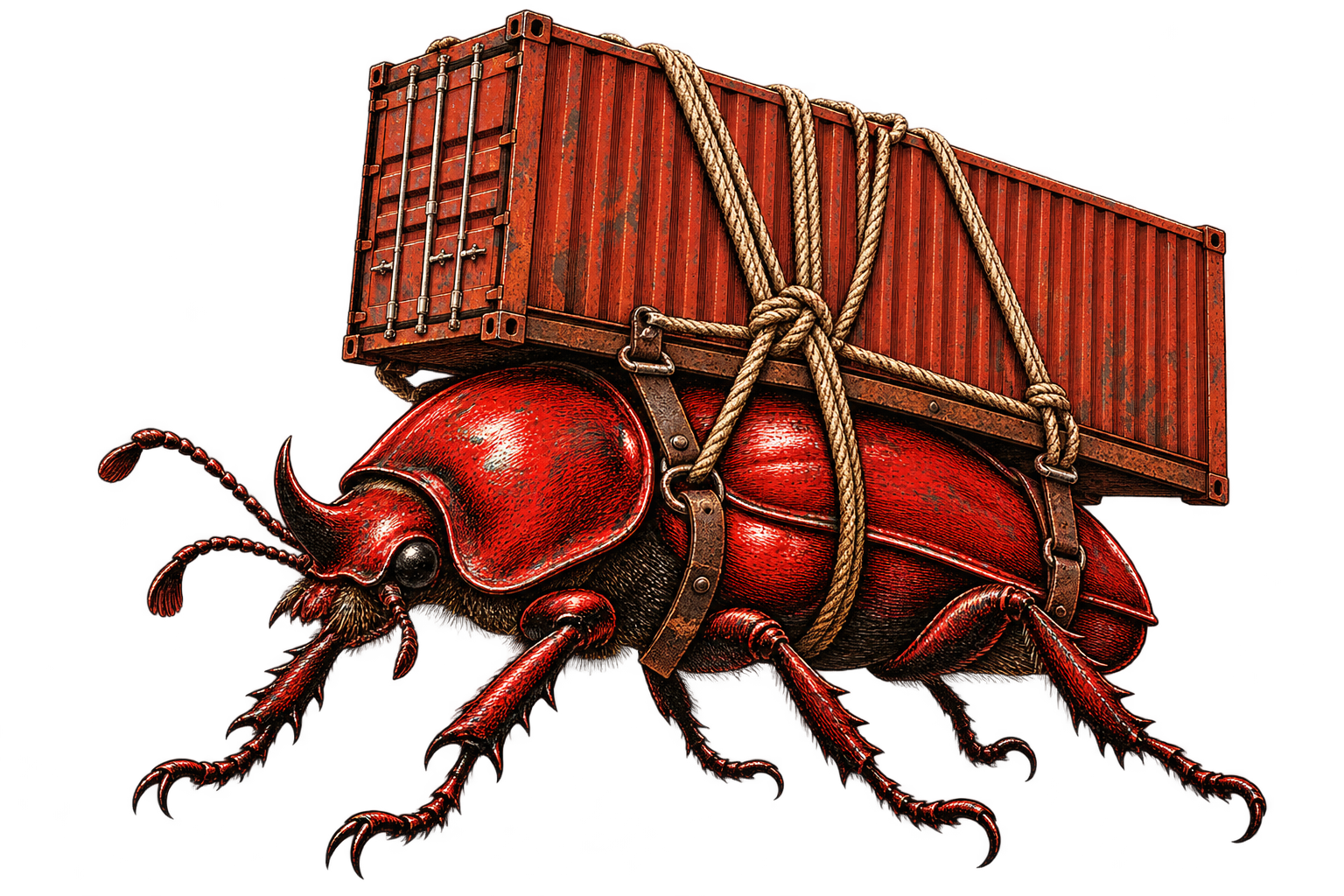
Bug
It started with one simple question: if something costs this much
to make, why is it being sold for that much?
How curiosity about prices, products and profit slowly changed
the way I looked at the world.
A Story About Where Business Really Begins
When I was younger, I thought businessmen were simply people who
were already rich. In my mind, they had money first and a business
came afterwards. They owned the shops, the factories and the
restaurants because they could afford to. I never stopped to think
that the business itself might have been the thing that created
their wealth—or that many of them may have started with very little.
At that age, the finished product was all I could see. Something
appeared in a shop, somebody bought it and the person behind the
counter made money. It looked straightforward. Yet one question
kept returning: where did the profit actually come from?
If a shopkeeper could buy something cheaply and sell it for more,
why did the customer not simply go to the same source? Who made the
product before it reached the shop? How many people touched it along
the way? Why did one person see an ordinary object while another saw
an opportunity?
Those questions did not arrive together. They grew slowly, almost
without me noticing. I would look at something as basic as a
paintbrush and begin thinking about the handle, the metal band and
every bristle. Someone had produced each part. Someone had assembled
it. Someone had packed it, transported it, displayed it and sold it.
What looked like one small product was actually a chain of businesses.
“The world had not changed. The way I was looking at it had.”
Then the habit followed me everywhere. Hardware shops were no longer
just rooms filled with tools. Restaurants were no longer simply
places where people ate. A coffee shop was not only coffee, chairs
and conversation. Behind every counter I began to imagine rent,
wages, ingredients, equipment, customers, waste and profit.
If I ordered a burger, I would mentally pull it apart. There was a
bun, a small patty, a little salad and some sauce—so how had those
ingredients become the price printed on the menu? I was not only
judging whether it was expensive. I wanted to understand the
transformation. The customer was not paying merely for bread and
meat. They were paying for the kitchen, the staff, the location,
the convenience, the brand and the promise that the same burger
could be produced again tomorrow.
I started doing this with almost everything. A gym made me think
about how many memberships were needed to cover the building and
the machines. A car wash made me wonder how much each wash cost to
provide and how many cars passed through in one day. Every café,
takeaway and small shop became a puzzle waiting to be solved.
It could be something small or something expensive; my mind would
follow the same route. What did it cost? Where did it come from?
Who was buying it? Why were they choosing this seller? And, most
importantly, what had made somebody believe there was a business
here in the first place?
As I grew older and spoke to friends, this way of thinking became
stronger. When somebody mentioned a person doing well in business,
I wanted to know the story behind it. How had they started? Did they
have money? Did they borrow it? Did they begin alone? What mistake
had nearly stopped them? What did they notice that everyone else
had ignored?
“I stopped seeing only the product. I began seeing the decisions
behind it.”
Even conversations about ordinary jobs could send my thoughts
somewhere else. People might discuss the employee, the salary or
the work, but my attention would jump to the company. Who owned it?
How had one person created enough work to employ ten people, a
hundred people or thousands? How had an idea grown into departments,
buildings, systems and wages paid every month?
That fascinated me. Starting one business already seemed difficult;
building something capable of supporting many families seemed
almost impossible. Yet people had done it. Somewhere, every large
company had once been only an idea in somebody’s mind.
Slowly, the thought changed from “How did they do it?” to “Could I
do it too?” I began imagining companies of my own. Some ideas lasted
for days; others disappeared within minutes. But the important thing
was not whether every idea was good. It was that my mind had begun
searching automatically.
There was no dramatic moment when I announced that I wanted to
become an entrepreneur. No lightning strike, no perfect plan and no
single product that changed everything. It was more like catching a
bug—the kind that stays in your system. Once it was there, I could
not return to seeing the world in quite the same way.
Prices became stories. Products became journeys. Shops became
experiments. Every person building something made me curious, and
every failure seemed to contain information that might be useful
later.
I did not yet understand how difficult business could be. I knew
nothing about delayed shipments, damaged goods, impatient customers,
rising costs or the weight of responsibility. I was looking at
possibility before I had experienced the pressure that came with it.
But perhaps that innocence was useful. Before business became
paperwork, risk and sleepless nights, it was curiosity. It was the
excitement of discovering that value could be created, that an
ordinary idea could become somebody’s livelihood and that the
person who started it did not have to be born with everything
already in place.
The bug had bitten. From then on, wherever I looked, I saw not only
what something was—but what it might become.
TheBusinessBug
End of Chapter One
The Story Continues
 The Business Bug